
Nutrition Feeds the Microbiology. Microbiology Feeds the Body.
All life begins with microbiology.
Before gut health became a category and before the industry started talking about the rumen, Richard Breunig was already working on a different approach to animal nutrition — one built on a simple but powerful idea: nutrition feeds the microbiology, and microbiology feeds the body.
That work became Microbiology Nutrition. Developed over more than a decade of on-farm trials at Clover Mist Farm in Wisconsin, it is the pairing of two fields — nutrition and microbiology — applied together to manage the complexity of the rumen and maximize what the cow gets from every pound of feed she consumes.
Priority IAC is the only company bringing these two fields together in this way. At the center of that approach is Smartbacteria™ — uniquely identified, naturally occurring bacterial strains selected for their specific modes of action inside the digestive tract. These are not generic organisms. They are Gut Enhancers, Gut Managers, Pathogen Inhibitors, and Immune Communicators — each with a job to do and a proven reason to be there.
The foundation of Microbiology Nutrition is built on eight core principles. These are the tools producers use to manage their operation — practical, reliable, and grounded in what actually works on the farm.
What This Means for Your Dairy Operation
Every principle in this framework was built on a working dairy farm — and every one of them is designed to be applied on yours.
Priority IAC works directly with dairy producers to build a Microbiology Nutrition program tailored to their operation. That means evaluating your current ration, your forage program, and your herd performance — then building around the principles that will move the needle most for your farm.
There is no cookie-cutter program. There is no dependency on a single supplier. Just a producer-first approach designed to put better results on your farm and more control in your hands.
Ready to start the conversation? 1-920-682-0264 | info@priorityiac.com | priorityiac.com/contact
Every animal has its own unique rumen biome. And yet, most dairy operations feed the entire herd the same Total Mixed Ration and expect the same response from every cow. That gap between individual biology and a uniform diet is where performance breaks down.
The Smartbacteria™ strains in P-One™ work to shift the microbiome profile of each animal, making it more aligned — more unified — so that cows respond more consistently to the same TMR. When the biome is stabilized, the ration can do its job. This is the starting point for everything that follows.
Energy efficiency begins with forage. Highly fermentable fiber, found in early maturity forages, works to help support energy delivery comparable to carbohydrates like corn — but without the risk that comes when rumen pH is left unmanaged.
When pH is not maintained, increased fermentable fiber creates conditions for acidosis. The Smartbacteria™ in P-One™ work to help support rumen pH balance, allowing bacteria to consume carbohydrates, produce usable energy, and generate microbial protein for the cow — all at no additional cost to the producer. High quality forage and a stable rumen work together. One without the other leaves performance on the table.
Why feed 65 pounds of dry matter intake when the same milk production is achievable on 55? Microbiology Nutrition is built on efficiency — getting more from less without sacrificing nutrition.
The Smartbacteria™ in P-One™ work to help stabilize the gut, allowing highly fermentable, high NFC rations to be fed without the elevated risk of acidosis. By removing low-value ingredients — straw, poor quality forages, less dense commodities — and replacing them with energy-dense ingredients and early maturity forages, producers can achieve the same or greater output on lower intakes. Less feed moving through the rumen means less waste, less manure, and more lay-down time. That is a more efficient cow.
Straw is a source of fiber, but it is not a source of usable nutrition. The cow cannot ferment it. Feeding straw fills the rumen with undigestible material that can take days or weeks to pass through — occupying space that should be used for energy-dense, fermentable feed.
The consequences are significant. Straw displaces the nutrients the cow needs for production, increases the risk of ketosis in fresh cows, and contributes to poor colostrum quality, slow milk letdown, and rapid loss of body condition. The industry has long leaned on straw as a scratch factor and fiber source. Microbiology Nutrition removes that dependency entirely. The rumen does not need scratch. It needs fermentable feed and a stable microbial environment to process it.
Corn silage is a forage — not a shortcut, not a risk, and not the high-starch liability it is often assumed to be. At roughly 35% starch, the remaining 65% of corn silage is forage fiber. It is simply a different color than haylage or ryelage.
Many producers believe an all corn silage ration is not viable. Microbiology Nutrition demonstrates otherwise. With the right protein, minerals, and Smartbacteria™ in place, an all corn silage ration is not only possible — it allows producers to simplify their operation, reduce spoilage risk, and improve the consistency and health of their herd. Priority IAC provides the microbiology and minerals to support the ration. The rest is in the producer’s hands.
Cows thrive on consistency. Consistent milking times, consistent feeding times, and consistent bunk management all contribute to a more predictable, productive animal. Feeding to an empty bunk is a discipline that compounds those results.
A ration is formulated for a 24-hour period. If it is not fully consumed, the ration was not delivered. Managing feed to run out at hour 23 creates a pattern — cows arrive hungry at the start of the next period, consume a larger initial feed, and enter a more productive second long lay-down, during which milk is produced. The result is a consistent milk response, driven by a consistent feeding pattern. It is a simple management principle with a direct impact on performance.
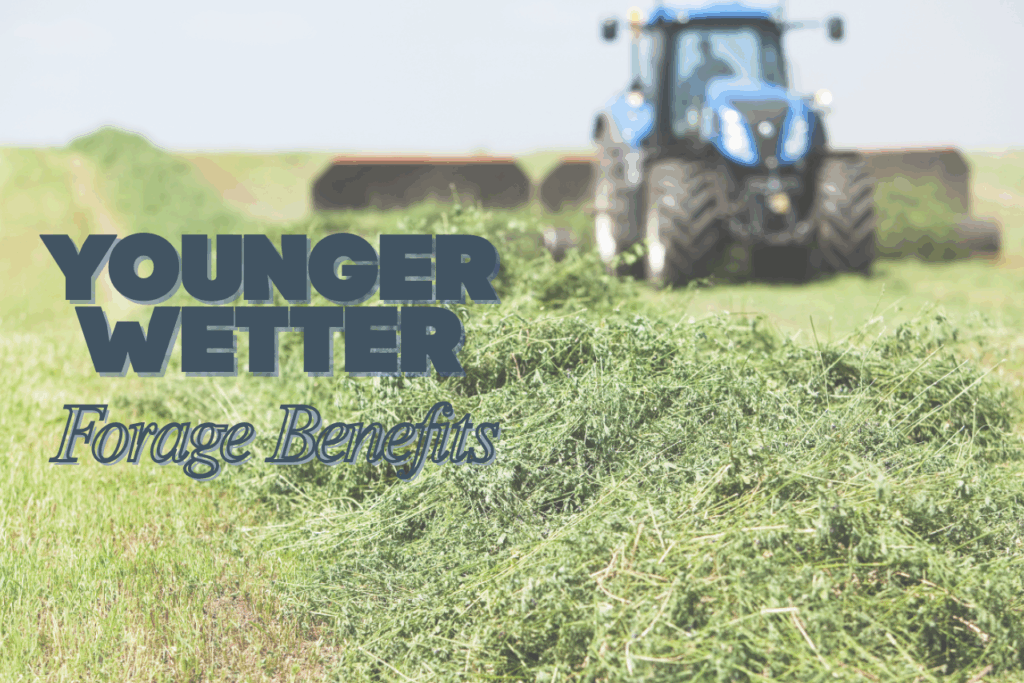
Moisture is not just a physical property of forage — it is an energy driver. The earlier the maturity and the wetter the forage at harvest, the more fermentable fiber is available to the cow. Plant moisture enhances what the rumen can access and use.
Drying forages removes moisture and, with it, availability. Adding water back to a ration after the fact is neither efficient nor equivalent to the original plant moisture. Wetter forages pack better in storage, ferment more quickly, produce more organic acids, and drop pH faster — reducing the risk of mold and wild yeast that create costly, long-lasting rumen disruption. Higher moisture feeds, stored and fermented correctly, work to deliver greater forage consistency and improved digestibility. That day of harvest sets the quality of the forage for the entire year. Getting it right starts there.
Microbiology Nutrition is not a service that creates dependency. It is a system designed to put control back where it belongs — in the hands of the producer.
Priority IAC’s role is education. The goal is to equip producers with the knowledge to manage their operation around principles, not prescriptions. Producers choose where to buy their commodity mix. Priority IAC provides the Smartbacteria™ through P-One™ and minerals through Ocean Minerals™ Smartbacteria catalyzer. The ration belongs to the producer. The results belong to the farm.
When a producer understands why the cow does what she does — why she responds to wetter forages, why an empty bunk matters, why the rumen needs stable pH — the operation improves from the inside out. That is the goal. An educated producer is a better producer, and a better producer builds a healthier, more productive herd.
Priority IAC works with dairy producers across the country to implement these principles on their farms. If you are managing a dairy and want to see what a Microbiology Nutrition program looks like in practice, we would like to talk. Reach out to our team — there is no obligation, just a conversation about your cows and your operation.
The eight principles provide the foundation. Understanding the science behind them helps producers apply them with confidence.
pH is the key to all life. The soil, the body, the rumen — each requires a stable, optimal pH to function. In the rumen, pH stability determines whether microorganisms can grow, produce volatile fatty acids, and generate microbial protein. When pH swings, performance swings with it. P-One™ works to help support rumen pH stability so the organisms can do their work consistently, day after day.
Smartbacteria™ eat something, make something, and then they die. When they die, they become microbial protein — broken down and used by the cow as amino acids. This is not a byproduct. It is a designed outcome. A well-managed rumen biome produces microbial protein that is perfectly amino acid balanced, at no additional cost to the producer.
All minerals work to support microbial growth, but ocean minerals have the most direct impact. Ocean Minerals™ are formulated in a highly available form to work to support microbial growth, enhance immune function, and benefit reproduction. The right minerals are not optional — they are foundational to the microbial environment the principles depend on.
An energy-dense ration helps fresh cows meet their nutritional needs more quickly, which works to help reduce the risk of ketosis when demand for energy is at its highest. Straw and poor hay in dry cow rations hold up fermentation post-calving and compound that risk. Removing them is not optional — it is a prerequisite for a strong transition.
Feed efficiency is the most milk for every pound of dry matter intake. For years, the industry pushed toward a 1.5-pound milk-to-dry-matter ratio but could not get there consistently without cow health consequences. Microbiology Nutrition removes that barrier. With the rumen stabilized and the right organisms in place, energy is used correctly, intakes come down, and output holds or improves. Less feed. Less waste. More production. That is what a healthy, efficient rumen looks like.
Microbiology Nutrition was not developed in a laboratory. It was built through more than a decade of trials on a working Wisconsin dairy — tested on real animals, under real conditions, with real results as the only measure that mattered.
The eight principles are not theory. They are a proven, producer-ready framework that dairy operations across the country are using right now to improve herd health, reduce input costs, and get more from every pound of feed.
If your dairy is ready for a different approach — one built around your cows, your forages, and your goals — Priority IAC is ready to help.
Get in touch with our team:
Call: 1-920-682-0264
Email: info@priorityiac.com
Online: priorityiac.com/contact
We work with dairy producers at every scale. The conversation starts with your farm and what you are trying to accomplish. That is it.