
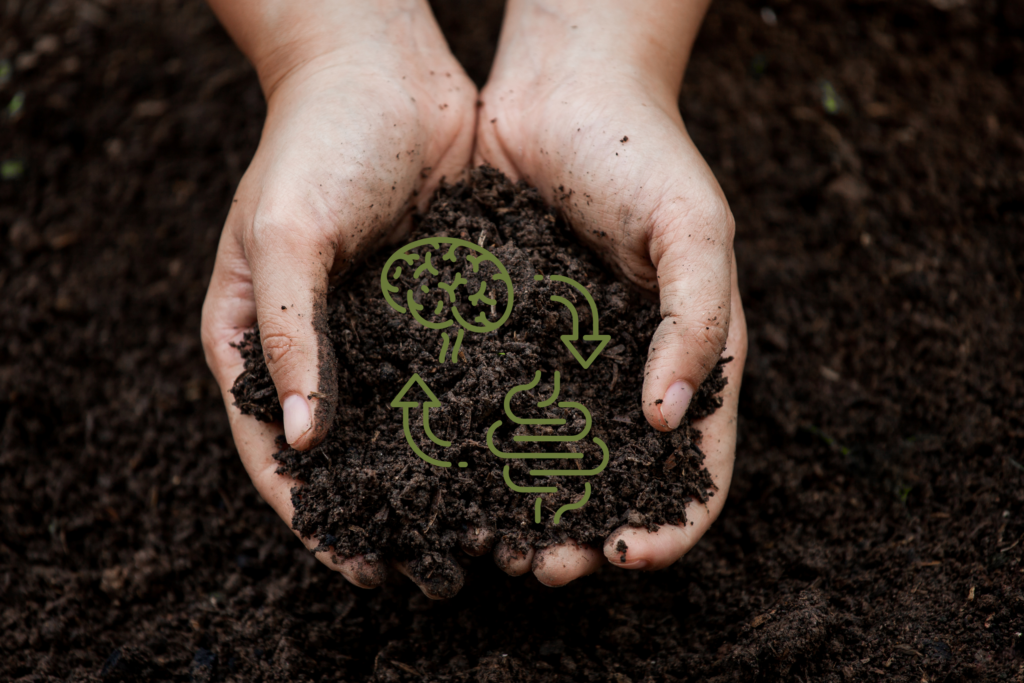
At Priority IAC, we’ve always believed in looking deeper, beyond the surface of nutrition, to the unseen forces that connect health, productivity, and the environment. One of the most overlooked truths in agriculture is this: what you feed your animals doesn’t stop with them. It cycles back into the soil, and the soil in turn influences the next generation of health and nutrition. This is the soil-gut connection.
Most conversations about animal nutrition focus on the animal, feed conversion, milk yield, growth rates. Those things matter, but they’re only part of the picture. The farm is a system, and every input you make to your animals ripple outward in ways that most producers never see.
Both the animal gut and the soil are living ecosystems. They thrive on diversity, balance, and beneficial microbial activity. Just as the rumen of a cow or the hindgut of a horse depends on bacteria to break down feed and unlock nutrients, the soil relies on its own microbial community to recycle organic matter, release minerals, and build fertility.
When you support the microbiome of your animals through quality animal nutrition and feed supplements for livestock, you are not only influencing their internal health but also the health of the land beneath your feet. Manure is more than waste. It is a microbial message to the soil, and its composition reflects the diet and gut balance of the animal it came from.
A cow fed a balanced, microbiome-rich diet produces fundamentally different manure than one fed a diet heavy in processed inputs with little microbial support. The difference isn’t visible to the naked eye, but the soil knows it.
When livestock are supported with quality feed supplements like Smartbacteria™, the manure they produce is more biologically active, less acidic, and richer in beneficial microbial life. Over time, that translates into real, measurable changes in the land.
Healthier manure means better soil structure, which allows water to penetrate and roots to establish more easily. It means increased nutrient availability, so crops can draw what they need without relying as heavily on synthetic inputs. That means a more resilient soil food web, the network of bacteria, fungi, and other organisms that keep ground fertile and productive across seasons.
On the other hand, when animal diets are imbalanced or stripped of natural microbial richness, the biological activity of manure suffers. That weakness compounds over time. Soil biology declines, ground hardens, fertility drops. The farm works harder and spends more to get the same results it once got naturally.
The connections here are not abstract. They are practical and they are generational.
Healthy feed leads to a healthy gut. A healthy gut produces biologically rich manure. That manure enriches the soil. Healthy soil grows more nutritious crops. Those crops feed the next cycle of animals and people.
The inverse is also true. Nutritional shortcuts taken today show up in soil quality years from now. Farms that invest in the microbiome of their herd through quality animal nutrition and livestock supplements are not just improving today’s production numbers. They are regenerating the very ground those animals stand on.
This is regenerative agriculture in its most fundamental form. It doesn’t require a new philosophy or a complete overhaul of your operation. It starts with what goes into the bucket, the trough, or the manger every single day.
The relationship between gut health and soil health is increasingly supported by research in both animal nutrition and agronomy. Studies in soil microbiology consistently show that microbially diverse organic inputs, including well-balanced manure, increase populations of beneficial soil bacteria and fungi. These organisms are directly responsible for nutrient cycling, carbon sequestration, and plant health.
Similarly, research in animal nutrition continues to demonstrate that bacteria supported diets improve feed efficiency, reduce digestive upset, and produce animals with stronger immune systems. When you put those two bodies of evidence together, the conclusion is straightforward: investing in your animals’ microbiome is investing in the biological capital of your farm.
For more than two decades, Priority IAC has worked at the intersection of microbiology and animal nutrition. Our Smartbacteria™ are not generic probiotics pulled off a shelf. They are scientifically selected strains, quality-tested through our Bacteria Quality System, and chosen specifically for their ability to thrive in the gut environment and support genuine digestive balance.
When animals are fed Priority IAC livestock supplements, they digest more efficiently, absorb nutrients more completely, and produce manure that carries that biological richness back to the land. It is a benefit that extends well beyond the animal and well beyond the season.
Because when animals thrive, the land thrives. And when the land thrives, the future of farming thrives.
It’s a cycle worth protecting, and it starts with what you choose to feed today.
Want to learn more about how Smartbacteria™ supports your animals from the inside out? Explore our products or get in touch with our team.